 backyardly
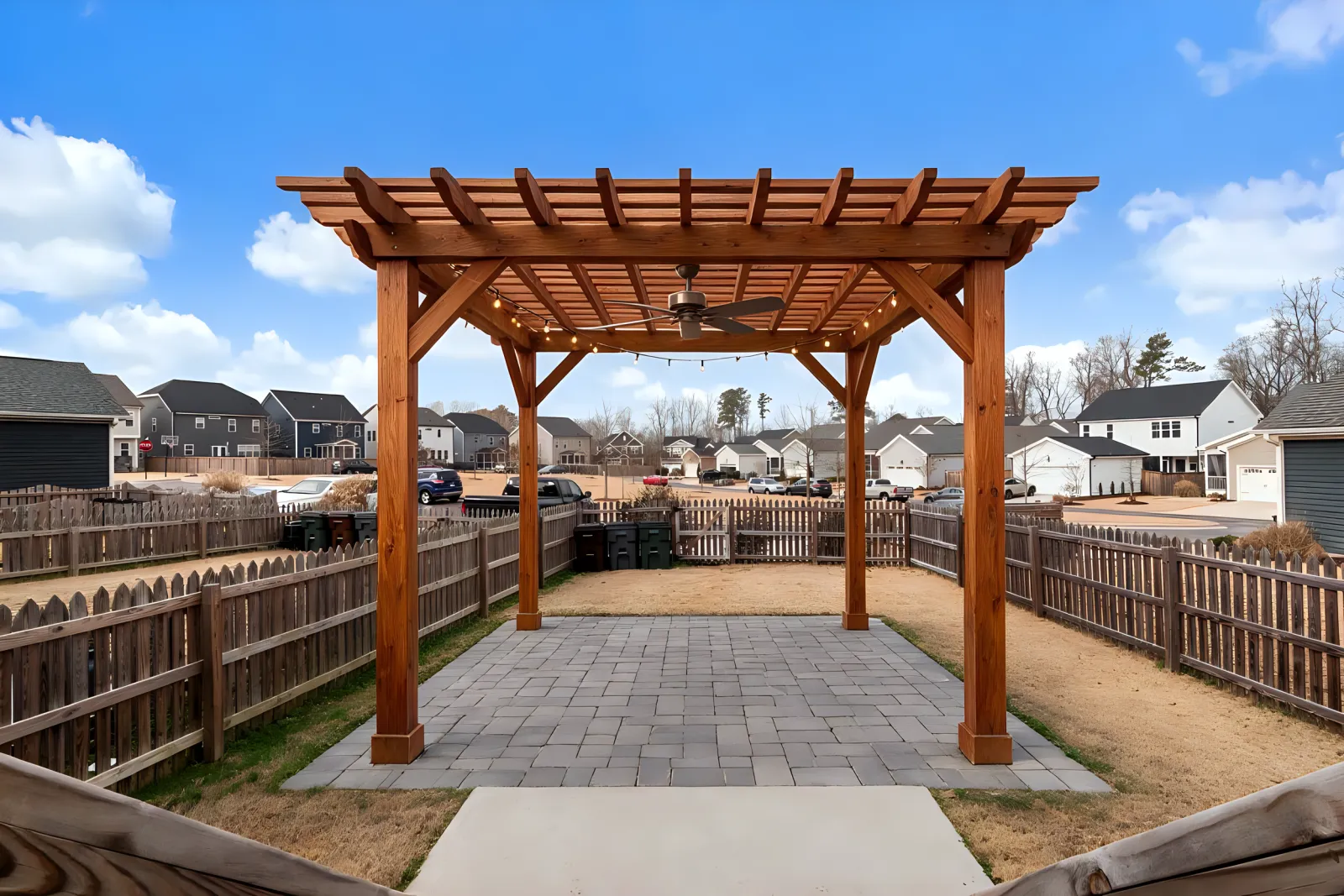
In the Southeast you need protection from three things: sun, short afternoon storms and mosquitoes. Each option handles a different mix. A shade sail is the cheapest way to block sun, but it comes down when a hurricane is coming. An open pergola is mostly about looks and gives partial shade. A louvered pergola or solid patio roof gives real shade and keeps rain off. A screened lanai is the only one of these that keeps bugs out. Here’s how they compare for a Tampa Bay or Atlanta backyard, including costs, storm prep and permits.
The five options side by side
| Shade | Rain | Bugs | Storm prep | Typical cost | |
|---|---|---|---|---|---|
| Open pergola (wood or aluminum) | Partial, depends on slat spacing and sun angle | No | No | Stays up | $2,118-$6,433 for ~10x10 |
| Louvered pergola | Full when closed | Yes, with built-in gutters | No | Open louvers for high winds | $6,500-$18,000 |
| Shade sail | Strong; up to 95.2% UV block on one product | Mostly no (knitted fabric) | No | Take the sail down | Sail $100-$200 plus posts and labor |
| Solid patio roof | Full | Yes | No | Stays up; built to code | Gable roof $2,200-$13,500 |
| Screened lanai / porch | Partial unless roofed | Only if roofed | Yes | Stays up; screens can tear | New screened patio $30-$47/sq ft |
Open pergolas: wood vs aluminum, and what the slats actually shade
An open pergola’s roof is a grid of beams and slats, so how much shade you get changes through the day. At midday in July, with the sun nearly overhead, slats spaced a few inches apart throw striped shade. In the late afternoon, when the sun is low in the west and the heat is worst, the light comes in under the roof from the side. Placement matters as much as the slats. Put the pergola where it blocks the western sun, or plan for a side screen, climbing vines or a fabric canopy.
Angi’s national figures put a typical 10x10 pergola at $2,118 to $6,433, with an average of $4,253. By material, aluminum or vinyl runs about $10-$30 per sq ft (mostly materials), cedar $25-$35 and redwood $40-$50. In humid Southeast summers, wood needs regular sealing or staining and checks for rot where posts meet the ground. Aluminum needs little upkeep, but note that Angi’s aluminum figures are mostly materials, so installation adds to them. Fixr notes a freestanding pergola usually needs four legs versus two for an attached one, which adds to the starting cost. Our pergola cost page breaks these numbers down by city.
Louvered pergolas and solid roofs: shade that also handles rain
A louvered roof opens for breeze and closes for shade or a storm. HomeGuide puts installed louvered or motorized systems at $6,500 to $18,000. Wind ratings from manufacturers depend on how the roof is set. StruXure, for example, says its Pivot 6 louvers were tested to 150 mph when fully open, and offers a sensor that opens the roof automatically at 60 mph. When closed, the louvers send rain into hidden gutters and down through the posts. That rating applies to that product in the open position, not to louvered roofs in general. Ask any brand for the engineering that covers your site and how the roof should be set before a storm.
A solid patio roof, whether a gable roof, an insulated aluminum panel roof or an extension of the house roof, gives full shade and keeps you dry during afternoon thunderstorms. Fixr prices a gable roof at $2,200 to $13,500 and aluminum roofs at $20 to $70 per sq ft installed. Its national average for a covered patio, including the patio itself, is $8,500. The trade-off is that a roof traps heat if there’s no fan, and it darkens the rooms behind it.
Shade sails: cheap, strong shade that comes down for storms
A sail is tensioned fabric between three or four anchor points. Coolaroo’s Coolhaven sails use knitted HDPE fabric rated up to 95.2% UV block. The fabric is breathable and not fully waterproof, so rain passes through it rather than pooling on top. That means you’re shaded but not dry in a 4 p.m. downpour. Ratings vary by model, so check the spec for the exact sail you buy.
The fabric is the cheap part. Fixr puts a sailcloth cover at $100 to $200, and a 12x18 ft patio with a sail at $1,828 to $5,600, most of which is the patio itself. What makes a sail safe is its anchors. Each corner pulls hard under tension and harder in gusts, so posts are typically set in concrete footings. Don’t assume a house fascia or gutter board can take that load without an engineer saying so. Ask the installer how they sized the posts and footings, and whether an engineer was involved.
Before a storm. The retailer’s care guidance is to take the sails down and store them indoors when extreme winds are forecast, especially in tropical storm and hurricane areas. Leave the posts in place and practice taking the sail down once on a calm day, so you aren’t figuring it out on a ladder while the wind picks up.
Screened lanais: the only option that stops mosquitoes
From Tampa to Charleston, bugs often decide whether a patio gets used at all. Pergolas and sails don’t help with that. A screened lanai or porch does. In Florida the aluminum “pool cage” over a pool and deck is the familiar version. Our pool enclosure cost page and the pool screen enclosure guide cover those in detail.
For a patio without a pool, Fixr gives $5 to $7 per sq ft to screen in an existing covered patio, $20 to $25 per sq ft for a screen enclosure, and $30 to $47 per sq ft for a new covered, screened patio. A Central Florida builder quotes a basic patio or porch enclosure at $6,000 to $10,000, or $10 to $24 per sq ft. A screened lanai with a solid or insulated roof combines the benefits of a covered patio and a screen room. Screen panels can tear in a big storm, so ask what rescreening a single panel costs.
Permits, wind and hurricane season
Structures attached to the house or set on footings often need a permit in Florida, and shade sails on posts can too. Hillsborough County’s checklist for residential screen enclosures and glass rooms covers sunrooms, lanais and similar projects. It requires a Residential Miscellaneous Permit, a to-scale site plan with setbacks, plans signed and sealed by a Florida-registered architect or engineer, and a recorded Notice of Commencement before the first inspection. Its accessory structure checklist applies to sheds, gazebos, carports and similar structures larger than 150 sq ft, with plans designed to the current Florida Building Code. Neither page names pergolas or sails specifically. Fixr’s general advice is that any structure needs a permit and that you should check with your town. As of this guide’s date, the safe approach in Tampa Bay is to ask the county or city permit office about your exact design before you order materials. Rules in Pinellas, Pasco, Georgia or the Carolinas differ. For how a permit process runs from start to finish, see the Hillsborough pool permit guide.
What to ask a contractor before you sign
- Is this attached to the house or freestanding, and what permit does that need here? Who pulls it?
- What wind speed is the structure designed for, and can I see the engineering or product approval?
- For a sail: how deep and wide are the footings, what size and wall thickness are the posts, and how long does it take to take the sail down?
- For a louvered roof: where does the water go when it’s closed, and what position should it be in before a storm?
- For wood: what species and treatment, and how often does it need sealing?
- For a screened lanai: what screen mesh are you using, and what does rescreening one panel cost?
- Are electrical work, fans and lighting included, and is the electrician licensed?
- What warranty covers the frame, fabric and workmanship? Get it in writing.
Check the contractor’s license yourself through Florida DBPR on myfloridalicense.com, or through your state’s licensing board outside Florida. Ask for proof of liability and workers’ comp insurance. Backyardly doesn’t check licenses or insurance for you.
See it in your own yard first
A sail, a pergola and a screened lanai each change how your house looks from the yard, and it’s hard to picture them from a brochure. An AI concept made from a photo of your own backyard lets you compare them in place before you collect quotes. If shade is one part of a bigger project, start with how to plan a backyard remodel.
See it in your own yard first.
Upload a photo of your backyard and get an AI concept of the project in a couple of minutes. Designs are free to try; a clean HD download is $2.99. If you like it, you can publish it for $4.99 to get quotes from up to 4 local pros.
Questions
Is a pergola or a shade sail better for Florida and the Southeast?
A shade sail is cheaper and blocks more sun, since Coolaroo's Coolhaven fabric is rated up to 95.2% UV block. But it should come down before extreme winds, and it doesn't keep rain off. A pergola is permanent and stays up through the season, but an open slat roof gives only partial shade unless you add louvers, fabric or a solid cover.
Do I need a permit for a pergola or screened lanai in Hillsborough County?
Hillsborough County's checklists say screen enclosures, lanais and sunrooms, and accessory structures larger than 150 sq ft, go through a Residential Miscellaneous Permit with a site plan and plans sealed by a Florida-registered architect or engineer. Confirm what applies to your project with the county or your city before you build.
How much does a shade sail cost compared with a pergola?
Fixr puts the sailcloth cover itself at $100 to $200, and a 12x18 ft patio with a sail cover at $1,828 to $5,600 including the patio. Angi puts a typical 10x10 pergola at $2,118 to $6,433, with an average of $4,253. Posts and footings for a sail are a big share of the real cost.
Should I take my shade sail down before a hurricane?
Yes. Coolaroo's retailer advises taking sails down and storing them indoors when extreme winds are forecast, especially in tropical storm and hurricane areas. Leave the posts in place and keep the hardware somewhere easy to find so you can put the sail back up after the storm.
Sources
- Angi - How Much Does It Cost to Build a Pergola? [2026 Data]
- HomeGuide - How Much Does a Louvered or Motorized Pergola Cost? (2026)
- Fixr - Covered Patio Cost (updated February 2025)
- Backyard City - Coolhaven Shade Sails by Coolaroo (product and care information)
- StruXure - How Pergola X Endures Any Forecast
- Hillsborough County - Residential Accessory Structure Requirements
- Hillsborough County - Residential Screen Enclosure and Glass Room Additions
- Dulando Screen - Pool Screen Enclosure Cost in Florida: 2026 Price Guide (Central FL builder)
Prices are third-party published estimates, not Backyardly quotes, and rules change. Check with your county or city and get written quotes before you decide. Last updated October 29, 2026.