 backyardly
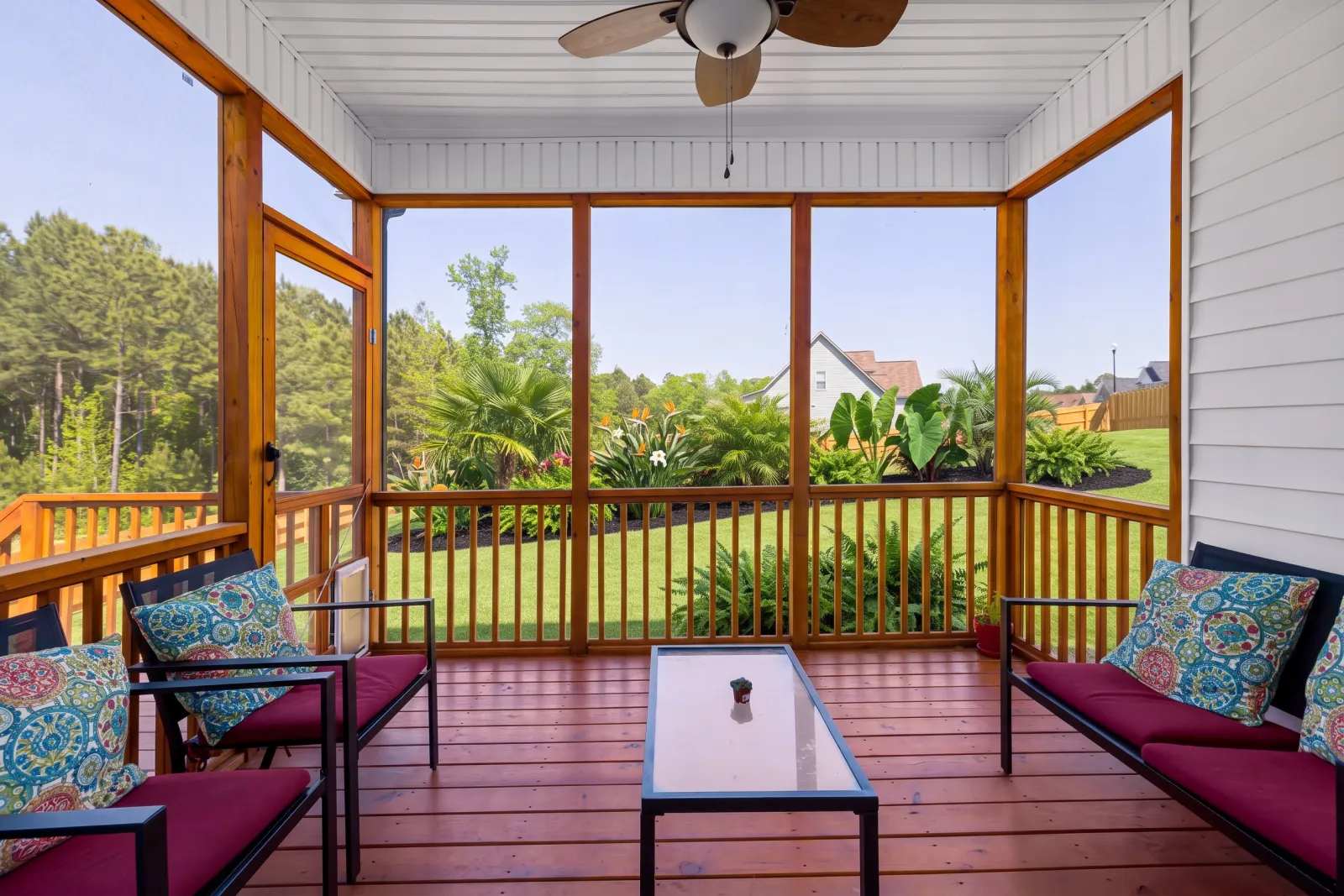
Florida-friendly landscaping is the University of Florida’s science-based approach to yards that need less water, fertilizer and pesticide, and in Tampa Bay it’s increasingly the practical choice as well as the green one. As of this writing the region is under a one-day-a-week watering order and a June-through-September fertilizer blackout, so a yard that depends on heavy irrigation and summer feeding is fighting the rules. This guide covers the nine UF/IFAS principles, what state law says about HOAs, the current local rules, plant ideas and what the work costs.
The nine Florida-Friendly Landscaping principles
The UF/IFAS Florida-Friendly Landscaping™ (FFL) program organizes its advice into nine principles:
- Right Plant, Right Place. Match plants and turf to your soil, light, water and climate, and to their mature size, so they need less water, fertilizer, pesticide and pruning once established.
- Water Efficiently. UF/IFAS recommends putting spray and rotor heads on separate zones, using low-flow or drip emitters in beds, limiting high-volume irrigation to no more than 60% of the area and calibrating to about ½-¾ inch per watering, in the early morning.
- Fertilize Appropriately. Feed only what plants need, and follow your local ordinance (see below).
- Mulch. FFL guidance is 2-3 inches deep, kept 12-18 inches from tree trunks and 1-2 inches from shrubs. It lists pine bark, pine straw, leaves, melaleuca, mixed hardwood and eucalyptus mulch, and says not to use cypress mulch.
- Attract Wildlife. Native flowering shrubs, grasses and groundcovers bring birds, butterflies and pollinators.
- Manage Yard Pests Responsibly. Healthy, well-placed plants need fewer treatments. Spot-treat rather than blanket-spray.
- Recycle Yard Waste. Leave clippings on the lawn, compost, and reuse leaves as mulch.
- Reduce Stormwater Runoff. UF/IFAS suggests rain gardens, swales and berms, porous surfaces for walkways and patios, and pointing downspouts into planted areas, plus rain barrels if your HOA allows them.
- Protect the Waterfront. On a pond, canal or bay, keep a minimum 10-foot low-maintenance zone at the water’s edge, with no mowing, fertilizer or pesticides in it.
What Florida law says, including about HOAs
Section 373.185 of the Florida Statutes defines Florida-friendly landscaping as quality landscapes that conserve water, protect the environment, are adaptable to local conditions and are drought tolerant. It has water management districts encourage counties and cities to require it for new development. Two parts matter to homeowners:
- Deed restrictions and covenants, the tools HOAs enforce, “may not prohibit or be enforced so as to prohibit” a property owner from implementing Florida-friendly landscaping on their land (s. 373.185(3)(b)).
- Local government ordinances may not do so either (s. 373.185(3)(c)).
The statute protects the approach, not any particular design, so you’ll probably still go through your HOA’s architectural review. Bring the UF/IFAS principles with you.
Section 373.62 adds a hardware rule: anyone who buys and installs an automatic landscape irrigation system must install, maintain and operate technology that shuts it off when there has been enough rain, such as a rain or soil-moisture sensor. Contractors working on these systems must test the device.
Tampa Bay watering rules right now
The Southwest Florida Water Management District (Swiftmud) has a Modified Phase III water shortage order running through March 31, 2027. It covers all of Hillsborough, Pinellas, Pasco, Manatee, Polk, Sarasota and other counties. Lawns may be watered one day a week, by the last digit of the address: 0-1 Monday, 2-3 Tuesday, 4-5 Wednesday, 6-7 Thursday, 8-9 Friday. Watering is allowed from midnight to 4 a.m. or 8 p.m. to 11:59 p.m. Hand watering and micro-irrigation of beds and shrubs is allowed any day before 8 a.m. or after 6 p.m. New lawns and plants get a 60-day establishment window, with any-day watering in the first 30 days.
Unincorporated Hillsborough County follows the same day schedule. It limits sprinklers to one run on your day and asks Tampa, Plant City and Temple Terrace residents to follow their city’s rules. Outside shortage orders, the District’s year-round measures have allowed lawn watering up to twice a week (2017 release). Rules change with rainfall, so check your city or county page before setting a timer.
This is where planting beds pay off. Beds on drip or micro-irrigation can be watered on more days than turf.
Summer fertilizer bans
Three overlapping Tampa Bay rules all block nitrogen and phosphorus from June 1 to September 30:
- Pinellas County: no nitrogen or phosphorus June 1-September 30, no phosphorus without a soil test showing deficiency, granular nitrogen at least 50% slow-release, no nitrogen on new plantings for 30 days, and a 10-foot fertilizer-free zone from water.
- Hillsborough County: no nitrogen or phosphorus on turf or landscape plants June 1-September 30, nitrogen at least 50% slow-release, nothing within 36 hours of a forecast of 2 inches or more of rain, and nothing within 10 feet of water. Violations can mean a fine of up to $500.
- City of Tampa: its ordinance restricts nitrogen and phosphorus June 1-September 30 and adds to the county Environmental Protection Commission rule, which sets a 10-foot fertilizer-free zone near water.
Other cities in the area have their own versions, so check yours.
Plants and the turf vs beds question
UF/IFAS Extension Hillsborough County highlights drought-tolerant natives for Central Florida:
- Sunshine mimosa: a pink-flowered groundcover that can work as a mowable lawn alternative in full sun and sandy soil.
- Beach dune sunflower: yellow flowers nearly year-round, for hot, dry spots.
- Muhly grass: a clumping grass with pink fall plumes. Prune it once a year in late winter if needed.
- Firebush: nectar for butterflies and hummingbirds, berries for birds. Full or part sun, and cold can damage it.
- Saw palmetto: very drought- and salt-tolerant once established, and grows 5-10 feet tall and wide.
Turf still has a place where kids and dogs play, but it is usually the thirstiest part of the yard. UF/IFAS notes St. Augustinegrass needs water to stay green in drought and that chinch bugs often hit water-stressed, full-sun areas first. Many Florida-friendly yards keep a smaller, usable lawn and convert hard-to-water strips, slopes and shady corners to mulched beds.
What it costs
Angi puts a typical Tampa sod job at $983-$2,612 (about $1,744), and HomeGuide lists St. Augustine at $0.95-$2.40 per sq ft installed. A sprinkler system averages $2,530 nationally ($1,640-$3,570), and Angi puts each irrigation zone at about $600-$2,000. A full backyard renovation runs $15,000-$50,000. See landscaping cost by city for Tampa and other local numbers. For sequencing the work with a patio or pool, see how to plan a backyard remodel.
What to ask a landscaper before you hire
- Are you familiar with the UF/IFAS Florida-Friendly Landscaping principles, and can you show a past project that follows them?
- Which plants do you recommend for each spot’s sun, soil and mature size, and which are native?
- Will beds and turf be on separate irrigation zones, with drip or micro-irrigation in the beds?
- Does the system have a working rain or soil-moisture shutoff, as state law requires?
- How will the plan handle the one-day-a-week watering order and the 60-day establishment period?
- What is your fertilizer schedule, and how does it follow the June 1-September 30 restrictions?
- Will you prepare drawings for HOA architectural review?
- Check any landscaper or irrigation contractor’s license yourself on the Florida DBPR license search and ask for proof of insurance. Backyardly doesn’t do this for you.
See it in your own yard first
Replacing lawn with planting beds is easier to commit to when you can see the result. An AI concept on a photo of your yard shows how layered beds, mulch paths and a smaller lawn could look from your porch. It’s not a planting plan, but it helps you and your HOA picture the change, and gives local pros a clear starting point.
See it in your own yard first.
Upload a photo of your backyard and get an AI concept of the project in a couple of minutes. Designs are free to try; a clean HD download is $2.99. If you like it, you can publish it for $4.99 to get quotes from up to 4 local pros.
Questions
What are the 9 principles of Florida-Friendly Landscaping?
UF/IFAS lists them as Right Plant Right Place, Water Efficiently, Fertilize Appropriately, Mulch, Attract Wildlife, Manage Yard Pests Responsibly, Recycle Yard Waste, Reduce Stormwater Runoff, and Protect the Waterfront.
Can my HOA stop me from doing Florida-friendly landscaping?
Florida Statute 373.185(3)(b) says a deed restriction or covenant may not prohibit, or be enforced so as to prohibit, a property owner from implementing Florida-friendly landscaping on their land. That doesn't automatically approve every design, so read your HOA's review process and talk to the board.
When can I fertilize my lawn in Tampa Bay?
Not from June 1 to September 30 with products containing nitrogen or phosphorus under the Pinellas County, Hillsborough County and City of Tampa rules. Hillsborough and Pinellas also restrict phosphorus without a soil test showing a deficiency, and keep fertilizer 10 feet from water.
How often can I water my lawn in Hillsborough County right now?
As of late October 2026, the Southwest Florida Water Management District has a one-day-a-week order in place through March 31, 2027, with your day set by the last digit of your address. Tampa, Plant City and Temple Terrace residents follow their city's schedule. Rules change, so check before you set a timer.
Do I need a rain sensor on my sprinkler system in Florida?
Yes. Section 373.62 of the Florida Statutes says anyone who buys and installs an automatic landscape irrigation system must install, maintain and operate technology that stops the system when there has been enough rainfall.
Sources
- UF/IFAS Florida-Friendly Landscaping - The nine principles
- UF/IFAS FFL - Principle 2 guidance (Water Efficiently)
- UF/IFAS FFL - Principle 4 guidance (Mulch)
- UF/IFAS FFL - Principle 8 guidance (Reduce Stormwater Runoff)
- UF/IFAS FFL - Principle 9 (Protect the Waterfront)
- Florida Statutes s. 373.185 - Local Florida-friendly landscaping ordinances
- Florida Statutes s. 373.62 - Water conservation; automatic sprinkler systems
- Southwest Florida Water Management District - District water restrictions
- SWFWMD newsroom (Sept. 2017) - Year-round water conservation measures in effect districtwide
- Hillsborough County - Watering days and times (unincorporated)
- Hillsborough County - Keep water clean by following fertilizer rules (July 2025)
- City of Tampa - Fertilizer management
- Pinellas County - Fertilizer ordinance
- UF/IFAS Extension Hillsborough County - Drought tolerant native plants for Central Florida
- UF/IFAS Gardening Solutions - St. Augustinegrass
- Angi - How Much Does Sod Installation Cost in Tampa, FL?
- Angi - How Much Does a Lawn Sprinkler System Cost? [2026 Data]
- HomeGuide - How Much Does St. Augustine Sod Cost? (2026)
- Angi - How Much Does Landscaping Cost? [2026 Data]
- Florida DBPR - License search (Verify a Licensee)
Prices are third-party published estimates, not Backyardly quotes, and rules change. Check with your county or city and get written quotes before you decide. Last updated October 29, 2026.