 backyardly
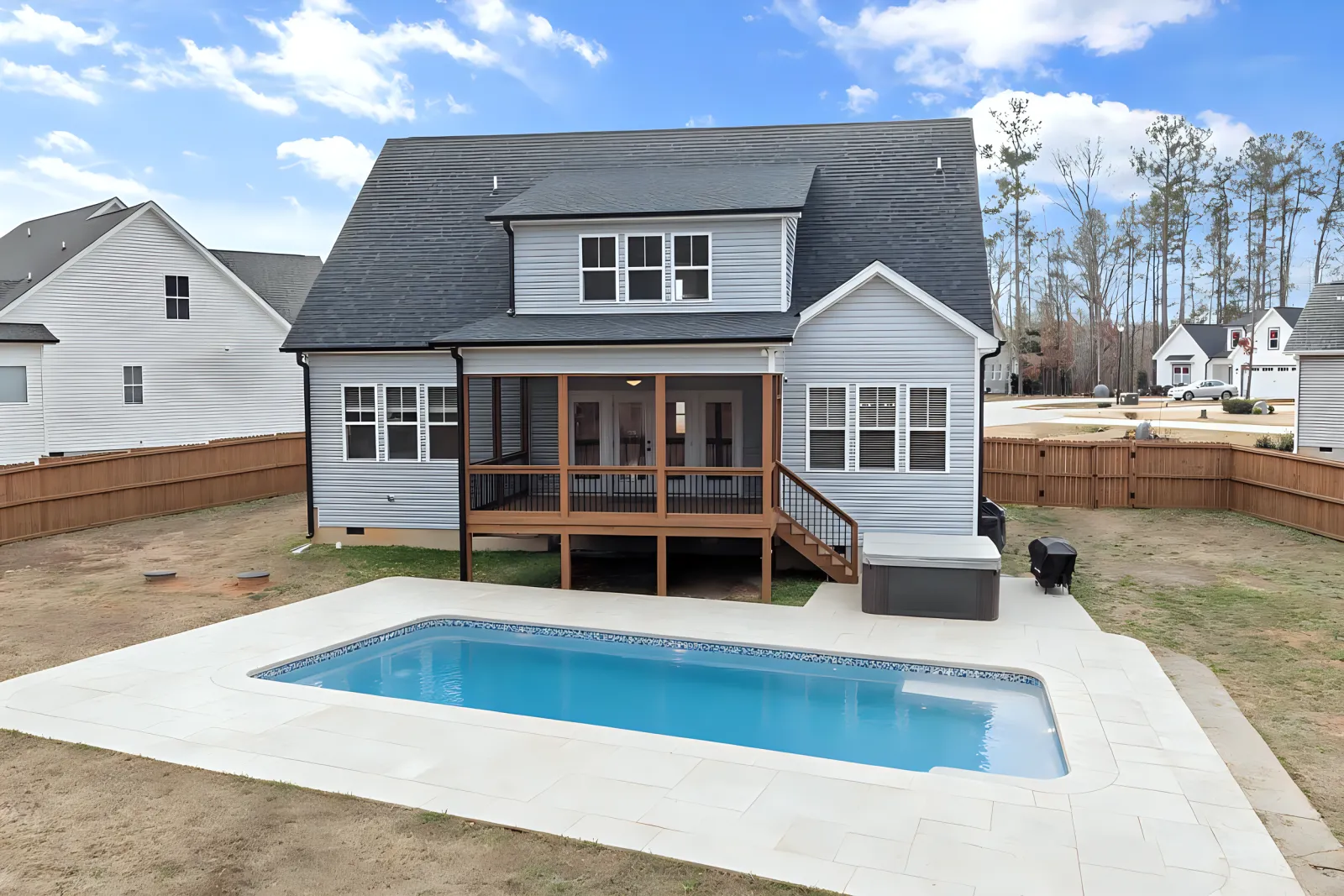
If you are building an in-ground pool in Florida, the choice is between three shells: vinyl liner, fiberglass and concrete (usually sprayed gunite or shotcrete). In Tampa, Angi puts vinyl at the low end, fiberglass in the middle and concrete at the top, but long-term costs differ too, because each type ages differently in Florida sun, sandy soil and shallow groundwater. This guide compares them on the things that actually differ: up-front cost, build time, lifespan, upkeep and how each behaves in a Florida yard.
For total project budgets by city, see pool cost by city. This page is about choosing the type.
The three pool types side by side
| Vinyl liner | Fiberglass | Concrete / gunite | |
|---|---|---|---|
| Tampa installed range (Angi 2026) | $40,000-$75,000 | $55,000-$100,000 | $65,000-$120,000 |
| Install cost per sq ft (This Old House) | $130-$240 | $175-$330 | $200-$350 |
| Typical build time | 3-5 weeks | Under 2 weeks to 3-5 weeks | “Many months” |
| Big recurring job | Liner every 5-9 years | Gel coat about every 10 years | Resurface every 10-15 years |
| Shape and size | Any shape the installer can frame | Factory shells, about 16 ft max width | Any shape and size |
| Algae resistance | Algae can collect in seams | Smooth, non-porous | Porous, needs regular brushing |
Sources disagree on build times. Fixr’s fiberglass-vs-vinyl comparison says a fiberglass pool can go in in under 2 weeks because the shell arrives in one piece, while its concrete comparison says three to five weeks. Permits, inspections and rain delays in a Florida summer stretch all three.
Vinyl liner: lowest entry price, recurring liner cost
A vinyl pool is a framed wall system with a custom-fit vinyl sheet as the waterproof surface. It is the cheapest to build, and the shape is flexible.
The trade-off is the liner. This Old House notes vinyl “can become brittle and crack in the sun” and expects a reline every 7 to 8 years; its resurfacing guide gives a range of five to nine years. Fixr puts each replacement at $3,000-$7,000. Liners are also thin and can be punctured by sharp objects, which matters with dogs and pool toys. This Old House estimates vinyl maintenance at $11,000-$17,000 over 10 years, liner included.
Vinyl makes sense if your budget is tight and you want an unusual shape. Plan for at least two liner changes over 20 years.
Fiberglass: fast and low-maintenance, limited sizes
A fiberglass pool is a one-piece shell made in a factory, trucked to your house and set in the hole by crane. Because the gel-coat surface is smooth and non-porous, it resists algae, and Fixr notes pumps can run 4 to 6 hours a day rather than longer, which saves electricity. This Old House calls fiberglass the best fit for saltwater systems because salt won’t degrade the material, and puts long-term maintenance at $5,000-$15,000.
The limit is size. Shells move on highways, and River Pools explains that most wide-load laws keep loads to about 16 feet wide. Fixr gives a maximum depth of 4-8 feet depending on the model. If you want a diving well, a long lap lane wider than 16 feet or a freeform shape that hugs an odd lot line, fiberglass probably won’t work. Access matters too: the crane needs a clear path over or around the house.
Fiberglass lifespan estimates run 20-25 years on Fixr, with the gel coat refreshed around year 10 for about $5,000. Fixr also warns a shell can crack if the ground settles or the install is poor, so backfill and base prep matter.
Concrete (gunite): any shape, highest upkeep
Concrete pools are framed with steel rebar, sprayed with gunite or shotcrete, then finished in plaster, aggregate or tile. You can build any size, depth or shape, add tanning ledges, beach entries and spas, and match an irregular Florida lot.
Concrete is porous, so algae finds a foothold. This Old House notes it needs regular brushing and careful water chemistry, an acid wash every 3 to 5 years, and gives the highest maintenance figure of the three: $27,000-$40,000 over 10 years. The plaster finish needs redoing every 10 to 15 years per Fixr (This Old House says ten to twenty, depending on region), and plain replastering runs about $5 per sq ft.
In exchange, This Old House rates concrete the most durable of the three, and Fixr says it can last for decades with regular resurfacing. Bob Vila also recommends a solid deck around it for long-term stability.
What Florida changes about the choice
Sandy soil and a high water table
UF/IFAS Gardening Solutions sums it up: Florida’s “soil” is mostly sand, and many new subdivisions sit on brought-in fill. In low-lying and coastal neighborhoods, groundwater can also sit close to the surface for part of the year. A full pool generally stays put. An emptied one can float. River Pools explains that groundwater around a shell must be removed before the pool is emptied or the level dropped significantly, and that this applies to gunite and even vinyl pools, not just fiberglass. Its builders set an 8-inch PVC dewatering pipe with gravel at the bottom of the deep end so a sump pump can draw groundwater down before any drain.
Builders handle this in different ways, including a hydrostatic relief valve in the main drain or a dewatering well like the one above, and they don’t all agree on which is best. Whatever type you choose, ask what groundwater protection is in the plan, and don’t drain the pool without checking it first. Also ask how the quote handles it if the excavation hits water.
Heat and sun
Florida UV is hard on vinyl, which fades and turns brittle. Fiberglass holds its color, per Fixr. Because Florida pools are used for much of the year, a smooth surface that resists algae saves the most weekly effort, and porous plaster that isn’t brushed shows it first.
Hurricanes
No pool type is “hurricane-proof”, but the bigger risk is draining. UF/IFAS Extension advises keeping the pool full until after the storm has passed and the yard has drained, warning that water outside a partially drained pool can crack it. It also says not to throw patio furniture into the pool.
The screen enclosure
Many Florida pools get a screen enclosure, and it is usually not in the pool price. Florida builder Rainforest Pools quotes $12,000-$15,000 for a small cage and $30,000+ for coastal high-wind builds. A cage keeps leaves out, which reduces skimming on any pool type. Footer placement has to be planned with the pool and deck, so design them together. See our pool screen enclosure guide for roof styles and screen types.
What to ask a pool builder before you sign
- Which shell types do you build, and which would you recommend for my lot, and why?
- For fiberglass: which manufacturer and model, what are the exact dimensions, and can a crane reach my backyard?
- For vinyl: what liner thickness and warranty, and what does a replacement cost today?
- For concrete: what interior finish is quoted, and what is the expected resurfacing interval?
- How will you handle groundwater during excavation, and what hydrostatic relief or dewatering is in the design?
- Does the price include permits, the deck, the electrical and a screen enclosure, or are those separate?
- Who pulls the permit, and what is the timeline from permit to swim? (See pool permits in Tampa and Hillsborough.)
- Can I see your Florida contractor license number? Look it up yourself at myfloridalicense.com and ask for proof of insurance.
Get at least three written quotes for the same size and features so the comparison is fair.
See it in your own yard first
Pool shape and size are much easier to judge on a picture of your own yard than in a brochure. An AI concept of a fiberglass rectangle next to a freeform concrete pool, on your actual backyard photo, helps you decide what fits before you ask builders to quote it, and gives them a clear picture of what you want.
See it in your own yard first.
Upload a photo of your backyard and get an AI concept of the project in a couple of minutes. Designs are free to try; a clean HD download is $2.99. If you like it, you can publish it for $4.99 to get quotes from up to 4 local pros.
Questions
Is fiberglass or concrete better for a Florida pool?
It depends on your yard and budget. Fiberglass usually installs faster and needs fewer chemicals because its smooth surface resists algae, but shells top out around 16 feet wide because they travel by truck. Concrete (gunite) costs the most up front and needs resurfacing every 10 to 15 years, but it can be built in any shape and size.
How much do vinyl, fiberglass and concrete pools cost in Tampa?
Angi's 2026 Tampa figures are $40,000-$75,000 for vinyl, $55,000-$100,000 for fiberglass and $65,000-$120,000 for concrete. Those cover the pool and equipment, not the deck or a screen enclosure.
How often does a vinyl pool liner need replacing?
Sources put it at roughly every 5 to 9 years (This Old House) or 7 to 9 years (Fixr), and Florida sun is hard on liners. Fixr puts a replacement at $3,000-$7,000.
Can you build a fiberglass or vinyl pool where the water table is high?
Yes, but plan for groundwater. A full pool is rarely the problem; the risk comes when the pool is drained and water pressure outside the shell is higher than inside. Ask the builder about a hydrostatic relief valve or a dewatering well before you sign.
Should I drain my pool before a hurricane?
No. UF/IFAS Extension advises keeping the pool full until the storm has passed and the yard has drained, because water pushing on a partly empty pool can crack it.
Sources
- Angi - How Much Does Inground Pool Cost in Tampa, FL?
- This Old House - Inground Pool Cost
- Fixr - Concrete vs Fiberglass Pool: Pros, Cons, Comparisons and Costs
- Fixr - Fiberglass vs Vinyl Liner Pool: Pros, Cons, Comparisons and Costs
- This Old House - What to Know About Pool Resurfacing
- Bob Vila - Types of Pools
- River Pools - Hydrostatic Pressure and Dewatering Systems for Fiberglass Pools
- River Pools - Biggest and Smallest Sizes for Fiberglass Pools
- UF/IFAS Extension Indian River County - Pools and Hurricanes
- UF/IFAS Gardening Solutions - Working in Your Florida Soil
- Rainforest Pools - Florida Pool Screen Enclosure Cost Guide
Prices are third-party published estimates, not Backyardly quotes, and rules change. Check with your county or city and get written quotes before you decide. Last updated October 29, 2026.